The Ancient Barabar Caves
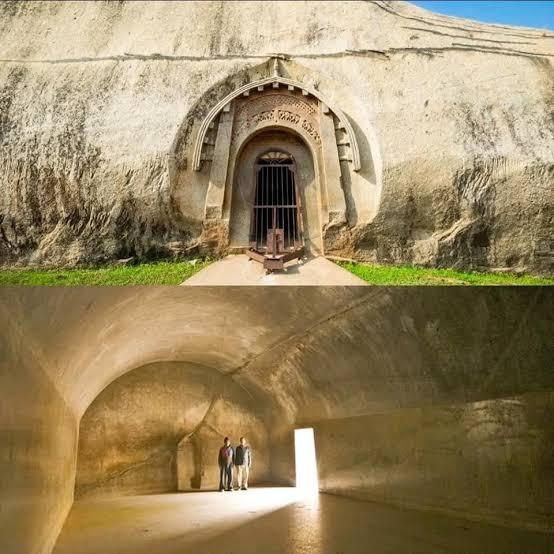
Located in the Jehanabad district, the Barabar Caves are the oldest surviving rock-cut caves in India, mostly dating from the Mauryan Empire (322–185 BCE) under rulers like Ashoka the Great. These caves are situated in the twin hills of Barabar and Nagarjuni, not far from Gaya.
The caves were used by ascetics from the Ajivika sect, founded by Makkhali Gosala. The most famous of these caves are Lomas Rishi, Sudama, Karan Chaupar, and Visva Zopri. They are remarkable for their highly polished granite interiors, which have a mirror-like finish, and a unique, long-lasting echo effect. The entrance to the Lomas Rishi cave is a stunning archway carved to imitate wooden architecture, a feature that would influence later rock-cut chaitya halls.
The caves' stark, geometric interiors and unusual acoustic properties have captivated visitors for centuries. This unique echo, where a sound can persist for several seconds, creates an otherworldly atmosphere. It is this haunting quality that inspired author E.M. Forster, who based the pivotal 'Marabar Caves' in his famous novel 'A Passage to India' on the Barabar Caves, making them a point of interest for literary pilgrims as well.
Inscriptions found in the caves reveal that they were dedicated by Emperor Ashoka and his grandson, Dasharatha Maurya, to the Ajivika monks. The precision and skill required to carve these monolithic granite caves with such smooth surfaces using ancient tools is a testament to the incredible craftsmanship of the Mauryan period. These caves are considered the origin of the rock-cut architecture tradition in India, a legacy of an era detailed in our post on The Great Emperor Ashoka.
Keywords: barabar caves, mauryan empire, ashoka, rock-cut caves, jehanabad, ancient bihar, ajivika sect